
How Much Protein Do You Need Per Day? A Simple Beginner’s Guide
Medical & Health Disclaimer:The information provided on FitnessNexa is intended strictly for educational and informational purposes. It does not replace individualized medical advice, clinical diagnosis, or dietary treatment from a licensed physician or registered dietitian. Always consult a healthcare professional before making major changes to your macronutrient intake.
Walk into any gym, scroll through social media, or glance down the supermarket aisle, and you will hear one constant piece of advice: “You need more protein.”
Yes, for most beginners, the exact numbers feel like high-level calculus. Should you eat 50 grams, 150 grams, or two grams per pound of body weight? Does extra protein automatically turn into muscle, or does it cause unwanted weight gain?
Protein is an essential macronutrient responsible for repairing tissue, manufacturing enzymes, supporting immune function, and preserving lean muscle mass. Getting your daily intake right is one of the most effective levers you can pull to transform your body composition and sustain your daily energy.
This guide breaks down the science of daily protein requirements into practical, actionable steps without confusing jargon. We will explain exactly how much protein you need per day based on your goals, how to calculate it, and the best whole-food sources to use.
1. The Baseline: What Science Actually Recommends you
Nutritional requirements are not one-size-fits-all. Your ideal daily protein target depends heavily on your activity level, age, biological sex, and primary fitness goal. The numbers required to simply maintain basic health are vastly different from the numbers required to build noticeable muscle.
The RDA vs. Optimal Fitness Intake
- The Recommended Dietary Allowance (RDA): The baseline health guideline recommends 0.8 grams of protein per kilogram of body weight (approx. 0.36g per pound). This number represents the minimum amount required to prevent clinical deficiency in a sedentary adult—it is not designed for optimal muscle preservation, recovery, or fat loss.
- The Active Individual Standard: Peer-reviewed sports nutrition consensus from organizations like the International Society of Sports Nutrition (ISSN) demonstrates that active individuals benefit from 1.4 to 2.2 grams of protein per kilogram of body weight (approx. 0.6 to 1.0g per pound).
2. Daily Protein Intake Calculator by Fitness Goal
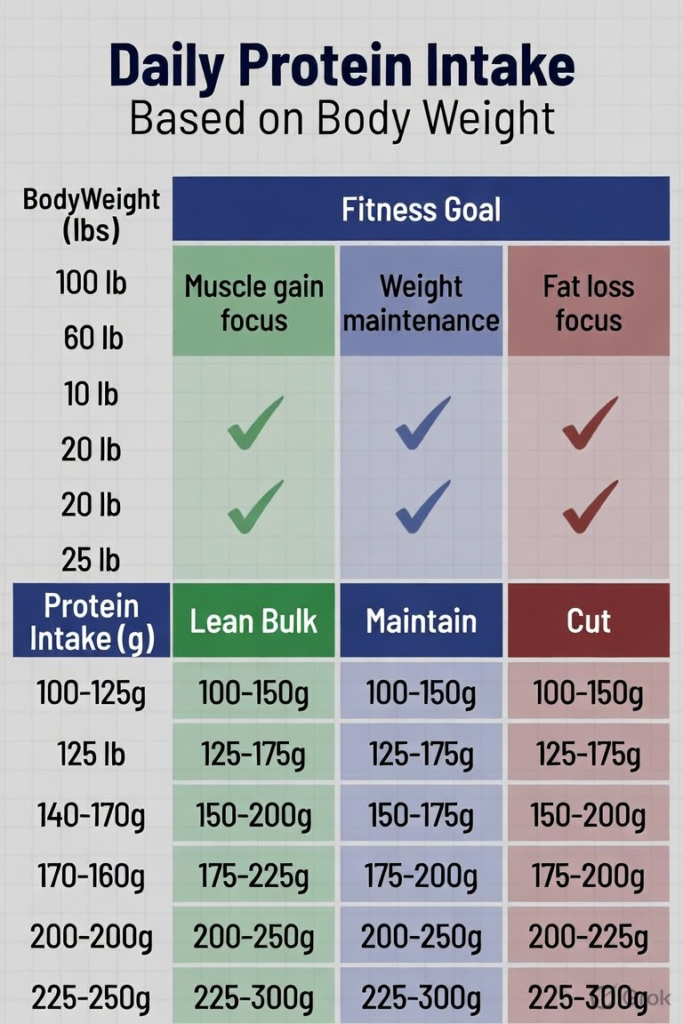
To find your target, identify your lifestyle profile and goal in the following reference table:
| Fitness Goal / Lifestyle | Grams per kg | Grams per lb | Daily Target Example (70 kg / 154 lbs) |
|---|---|---|---|
| Sedentary / General Health | 0.8 – 1.0 g/kg | 0.36 – 0.45 g/lb | 56g – 70g |
| Endurance Athlete (Running/Cycling) | 1.2 – 1.6 g/kg | 0.55 – 0.72 g/lb | 84g – 112g |
| Lean Muscle Building (Hypertrophy) | 1.6 – 2.2 g/kg | 0.73 – 1.0 g/lb | 112g – 154g |
| Fat Loss (Preserving Muscle in Deficit) | 1.8 – 2.4 g/kg | 0.82 – 1.1 g/lb | 126g – 168g |
Pro-Tip for Weight Loss: If you are carrying significant body fat, calculating protein based on total body weight can sometimes yield an unnecessarily high target. Instead, calculate based on your target ideal body weight or lean body mass.
3. How to Hit Your Daily Target: Best Whole Food Sources
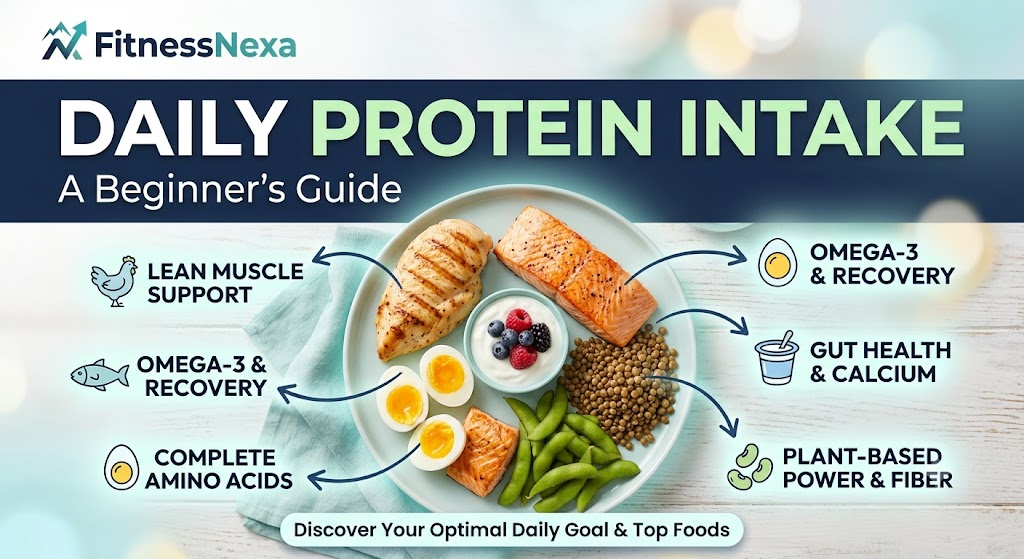
Meeting your daily target does not require endless supplements or dry chicken breasts. The goal is to build your meals around a diverse mix of complete amino acid profiles.
Complete Animal-Based Sources
Animal proteins are complete, meaning they supply all nine essential amino acids in optimal ratios for muscle protein synthesis:
- Chicken / Turkey Breast (Cooked): ~31g protein per 100g serving
- Eggs & Egg Whites: ~6g per whole egg (~10g per 100g liquid whites)
- Greek Yogurt (0% Fat): ~10–12g protein per 100g serving
- Cottage Cheese / Low-Fat Paneer: ~11–18g protein per 100g serving
- Salmon / White Fish / Tuna: ~20–26g protein per 100g serving
- Whey / Casein Protein Isolate: ~24–27g protein per scoop (30g)
High-Quality Plant-Based Sources
Plant sources supply valuable micronutrients and prebiotic fiber alongside protein:
- Tofu / Tempeh: ~15–19g protein per 100g serving
- Lentils & Chickpeas (Boiled): ~9g protein per 100g serving
- Edamame (Green Soybeans): ~11g protein per 100g serving
- Seitan (Wheat Gluten): ~25g protein per 100g serving
- Hemp Seeds / Chia Seeds: ~30g / ~17g protein per 100g
- Plant Protein Powders (Pea/Rice Blend): ~20–25g protein per scoop
4. Sample 130g High-Protein Daily Meal Template
Here is a practical, easy-to-follow meal structure demonstrating how an active individual can hit 130+ grams of clean protein across the day:
- Breakfast: 3 Whole Eggs scrambled with a handful of spinach + 1 slice of whole-grain toast (~22g Protein)
- Mid-Day Snack: 1 cup Plain Greek Yogurt mixed with berries and 1 tbsp chia seeds (~20g Protein)
- Lunch: 120g Grilled Chicken Breast (or Pan-Seared Tofu) + 1 cup brown rice + mixed roasted vegetables (~38g Protein)
- Post-Workout / Afternoon Snack: 1 scoop Whey/Plant protein powder blended with water or unsweetened almond milk (~25g Protein)
- Dinner: 1 cup Cooked Lentil/Bean chili topped with 30g low-fat cheese alongside a fresh garden salad (~25g Protein)
- Total Daily Protein: ~130 Grams
5. Common Protein Mistakes Beginners Make
1. Eating All Protein in One Meal (The Distribution Issue)
Muscle Protein Synthesis (MPS) functions best when protein intake is distributed evenly across 3 to 5 meals throughout the day (approx. 25–40g per meal). Consuming your entire daily allowance in a single meal is less effective for recovery and muscle retention than paced feedings.
2. Ignoring Fiber and Hydration
Increasing dietary protein without increasing water and dietary fiber can lead to sluggish digestion and bloating. High-protein diets require adequate fluids for nitrogen metabolism. Aim for 2.5–3.5 liters of water daily and keep vegetable intake high.
3. Over-Relying on Powders
Protein powders are convenient tools, not whole-food replacements. Whole food sources supply vital micronutrients (iron, B12, zinc, healthy lipids) that isolate powders lack. Limit protein shakes to 1–2 servings per day.
4. Fearing Kidney Issues in Healthy Individuals
In individuals with normal, healthy renal function, comprehensive scientific reviews indicate high-protein diets do not impair kidney health. However, anyone with pre-existing renal conditions must consult their nephrologist or physician before increasing intake.
6. Frequently Asked Questions (FAQ)
Can your body only absorb 30 grams of protein in one sitting?
No. Your digestive tract absorbs virtually all protein consumed over time. However, the upper threshold to maximally stimulate Muscle Protein Synthesis in a single meal is typically between 25 and 40 grams. Excess amino acids are metabolized for fuel, structural support, or other bodily processes.
What happens if you don’t eat enough protein while working out?
If your protein intake remains consistently below your recovery requirements, your body cannot efficiently repair muscular micro-damage from training. This leads to prolonged muscle soreness, plateaued strength gains, and potential loss of lean tissue.
Does cooking protein powder destroy the nutrients?
Baking or cooking with protein powder alters its physical structure (denaturation), similar to cooking an egg. Denaturation does not destroy amino acids or diminish the nutritional value your body absorbs.
Conclusion & Next Steps
Hitting your daily protein goal does not have to be complicated. Calculate your baseline range using your target weight and activity level, choose 3–4 whole-food staples you enjoy, and stay consistent with your meal planning.
What is your current daily protein target, and what is your favorite high-protein staple? Drop a comment below!