


15 High-Protein Indian Foods for Vegetarians (Best 2026 Diet Guide)
Medical & Health Disclaimer:The dietary insights shared on FitnessNexa are designed for educational and informational purposes only. This content does not replace clinical nutritional therapy or individualized medical guidance. Always consult a registered dietitian or licensed physician before making drastic shifts in your daily macronutrient profile.
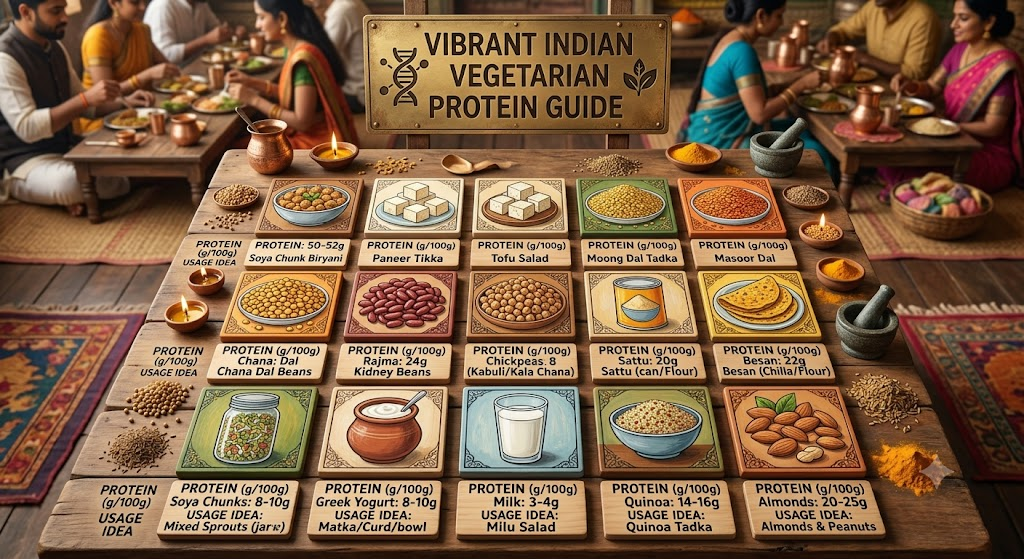
Finding adequate high-protein Indian foods for vegetarians is often seen as an uphill battle, but building muscle and burning fat on a traditional desi diet is entirely achievable with the right ingredient choices. Whether your goal is lean muscle hypertrophy, athletic recovery, or sustained fat loss, your daily protein target does not require reliance on meat.
A common misconception in Indian households is that standard vegetarian meals are naturally protein-dense. In reality, traditional plates skew heavily toward carbohydrates and saturated fats. By intentionally selecting nutrient-dense legumes, dairy, seeds, and plant isolates, you can effortlessly achieve 100 to 140 grams of quality amino acids daily while enjoying authentic flavors.
Why Vegetarian Protein Quality Matters (The Amino Acid Profile)
Protein is composed of 20 amino acids, nine of which are considered “essential” because the human body cannot synthesize them internally. According to the National Center for Biotechnology Information (NCBI), animal proteins are complete proteins containing all nine essential amino acids, whereas many plant sources have limiting amino acids (often lysine or methionine).
Fortunately, traditional Indian culinary pairings naturally solve this limitation. Combining grains with pulses—such as Khichdi (rice and moong dal) or whole wheat roti with lentil curry—creates a complementary amino acid profile that matches the biological value of complete proteins. When planning your routine, you can also explore our foundational guide on how much protein do you need per day to establish your exact baseline.
The 15 Best High-Protein Indian Foods for Vegetarians
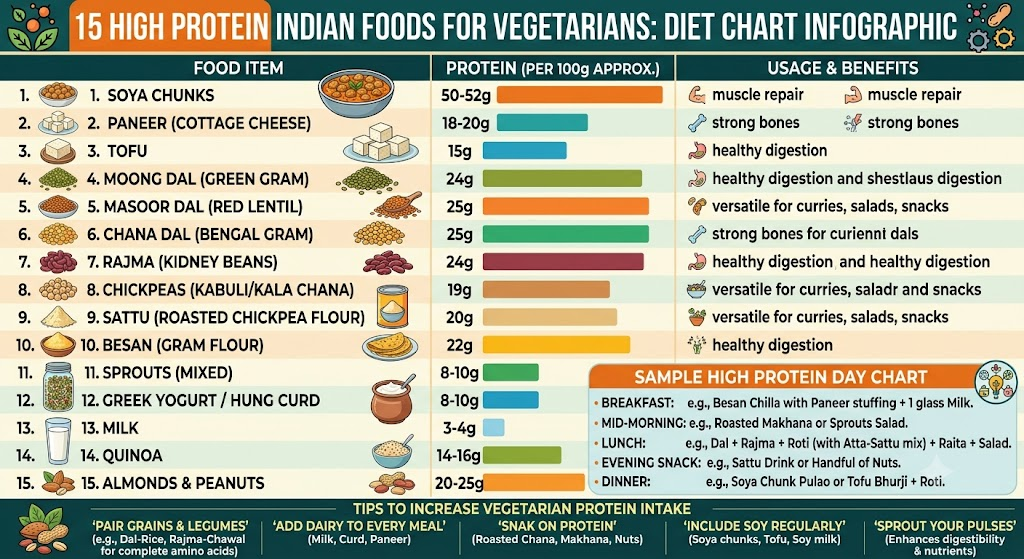
Here is the definitive breakdown of the top 15 staples available across Indian grocery markets, organized by macro efficiency and amino acid density.
| Food Item | Serving Size | Protein (Grams) | Primary Benefits |
|---|---|---|---|
| 1. Soya Chunks | 100g (Raw) | 52g | Highest protein density, complete profile |
| 2. Low-Fat Paneer | 100g | 18–20g | Rich in slow-digesting casein & calcium |
| 3. Organic Tempeh | 100g | 19g | Fermented, gut-friendly, highly bioavailable |
| 4. Tofu (Soy Paneer) | 100g | 15–17g | Low calorie, zero cholesterol, versatile |
| 5. Greek Yogurt / Hung Curd | 100g | 10–12g | Probiotic support with low lactose |
| 6. Sprouted Moong Beans | 100g (Boiled) | 8–9g | Enhanced enzyme bioavailability & fiber |
| 7. Kala Chana (Black Chickpeas) | 100g (Cooked) | 9g | Low glycemic index, rich in dietary iron |
| 8. Edamame (Green Soybeans) | 100g (Steamed) | 11g | Complete plant protein, rich in folate |
| 9. Kabuli Chana (White Chickpeas) | 100g (Cooked) | 8.8g | High satiety, ideal for curries & salads |
| 10. Rajma (Red Kidney Beans) | 100g (Cooked) | 8.7g | Complex carbohydrates + steady energy |
| 11. Roasted Chana (Sattu Base) | 50g | 11g | Convenient portable snack, zero cooking |
| 12. Pumpkin & Hemp Seeds | 30g (2 tbsp) | 9–10g | Zinc, magnesium, and healthy omega fats |
| 13. Masoor Dal (Red Lentils) | 100g (Cooked) | 9g | Rapid cook time, light on digestive system |
| 14. High-Protein Peanut Butter | 32g (2 tbsp) | 8–10g | Calorie-dense fuel for active individuals |
| 15. Plant Protein Isolate (Pea/Brown Rice) | 33g (1 Scoop) | 24–26g | Pure macro efficiency, rapid post-workout digestion |
Detailed Nutritional Highlights of Core Indian Staples
1. Soya Chunks & Tofu: The Muscle-Building Powerhouses
Soya chunks (often called vegetarian meat) provide an astonishing 52g of protein per 100g dry weight. They are virtually fat-free, highly economical, and readily absorb rich Indian spices. Research published by the International Society of Sports Nutrition (ISSN) confirms that soy protein matches whey protein in triggering muscle protein synthesis when total daily leucine targets are met.
2. Low-Fat Dairy: Paneer, Curd, and Whey
Paneer is an iconic Indian culinary staple. However, standard full-fat commercial paneer contains roughly 20–25g of fat per 100g. Switching to low-fat paneer or hung curd allows you to maximize amino acid ingestion while keeping overall caloric intake controlled during a fat-loss phase.
3. The Legume & Pulse Collective: Moong, Kala Chana, and Rajma
Lentils (Dals) are dietary cornerstones across India. While rich in complex carbohydrates, sprouting legumes like green moong significantly improves digestive enzyme activity, lowers phytates (anti-nutrients), and elevates total micronutrient absorption.
Sample 125g Daily Vegetarian Indian Meal Plan
Hitting a high protein target does not require eating boring food. Here is an actionable 1-day meal plan demonstrating how to integrate high-protein Indian foods for vegetarians seamlessly:
- Breakfast (8:00 AM): 3 Besan-Paneer Cheelas (made with 50g besan + 60g grated low-fat paneer) paired with mint chutney (~24g Protein)
- Mid-Morning Snack (11:30 AM): 150g Hung curd/Greek yogurt topped with 15g roasted pumpkin seeds (~18g Protein)
- Lunch (1:30 PM): 50g (dry weight) Soya chunk curry + 1 cup brown rice/2 multigrain rotis + cucumber salad (~30g Protein)
- Evening Pre/Post-Workout (5:30 PM): Sattu drink (40g roasted chana flour mixed in chilled water with roasted cumin) or 1 scoop plant protein (~20–25g Protein)
- Dinner (8:30 PM): 1 large bowl of Sprouted Moong & Tofu salad (100g sprouts + 80g pan-seared tofu) seasoned with chaat masala and lemon (~28g Protein)
- Total Daily Protein: ~120g – 125g
To support this nutritional foundation with a structured training split, pair your nutrition with our comprehensive beginner full body workout routine.
3 Common Mistakes in Vegetarian Indian Diets
1. Treating Normal Dal as a Primary Protein Source
One cooked katori (bowl) of standard yellow dal contains roughly 4–5 grams of protein alongside 15–20 grams of carbohydrates. While healthy, consuming dal alone will not yield the density needed for athletic recovery without driving up overall calories. Always pair pulses with paneer, soya, or seeds.
2. Excessive Use of Cooking Oils and Ghee
Vegetarian dishes frequently absorb large quantities of cooking fats during tadka (tempering). Measure your cooking fats with a spoon rather than pouring freely to maintain a clean macronutrient balance.
3. Inadequate Hydration with Fiber-Dense Legumes
Plant proteins carry significant dietary fiber. Failing to drink 3 to 4 liters of water daily alongside a high-legume intake can cause temporary bloating. Increase your intake gradually over two weeks to allow gut microbiota to adapt.
Frequently Asked Questions (FAQ)
Are high-protein Indian foods for vegetarians sufficient for bodybuilding?
Yes. Combining diverse plant isolates, dairy (paneer/curd), and legumes easily fulfills the 1.6–2.2g per kg body weight needed for maximum muscle hypertrophy.
Does eating soya chunks daily cause hormonal imbalances in men?
No. Extensive clinical meta-analyses demonstrate that moderate consumption of soy foods (50–60g dry soya chunks or 150g tofu daily) does not adversely alter male testosterone or estrogen levels.
Which Indian vegetarian food has the highest protein content per 100g?
Dry soya chunks provide the highest natural concentration, offering approximately 52 grams of pure protein per 100-gram serving.
Final Takeaway
Transitioning to a protein-forward vegetarian lifestyle does not mean abandoning traditional Indian meals. By making conscious swaps—such as replacing full-fat dairy with low-fat paneer, integrating daily soya chunks, and sprouting your pulses—you can easily reach your fitness goals.
Which of these 15 Indian protein sources is already your favorite, and which one are you adding to your cart today? Share your experience in the comments below!