
Slow Fat Loss Progress? Here’s Why and How to Accelerate
Let’s Talk Honestly
There was a phase in my fitness journey that tested my patience more than anything else.
I was doing everything right.
Workouts were consistent.
Food was under control.
Steps were good.
Sleep was improving.
In the beginning, everything worked.
Weight was dropping.
I felt motivated.
Progress was visible.
But after some time, things changed.
The scale stopped moving.
Days passed. Then weeks.
Same routine.
Same effort.
But no results.
That’s when frustration started.
I kept thinking:
What am I doing wrong?
Why is my body not responding anymore?
That phase felt harder than the beginning. Because in the beginning, you see results. Here, you only see effort.
But later, I understood something important.
My body was not failing.
It was adapting.
Weight Loss Is Not Linear
When I started, I believed weight loss was simple.
Eat less. Move more. Lose weight.
And honestly, it worked in the beginning.
But after some time, I noticed:
Progress slowed down.
Results became inconsistent.
Some weeks showed no change at all.
That’s when I realized:
Weight loss is not a straight line.
Your effort can stay consistent, but results don’t always follow the same pattern.
When Your Body Feels Pressure, It Slows Down
At first, I didn’t understand why this was happening.
Later, I learned something important.
From your body’s perspective:
Calories are lower.
Activity is higher.
Energy demand increases.
The body sees this as stress.
And when the body feels stress, it tries to protect itself.
It slows down certain processes.
It becomes more efficient.
It holds onto energy.
That’s when fat loss becomes slower.
This is not failure. This is a natural response.
My Real Experience With Weight Loss Resistance
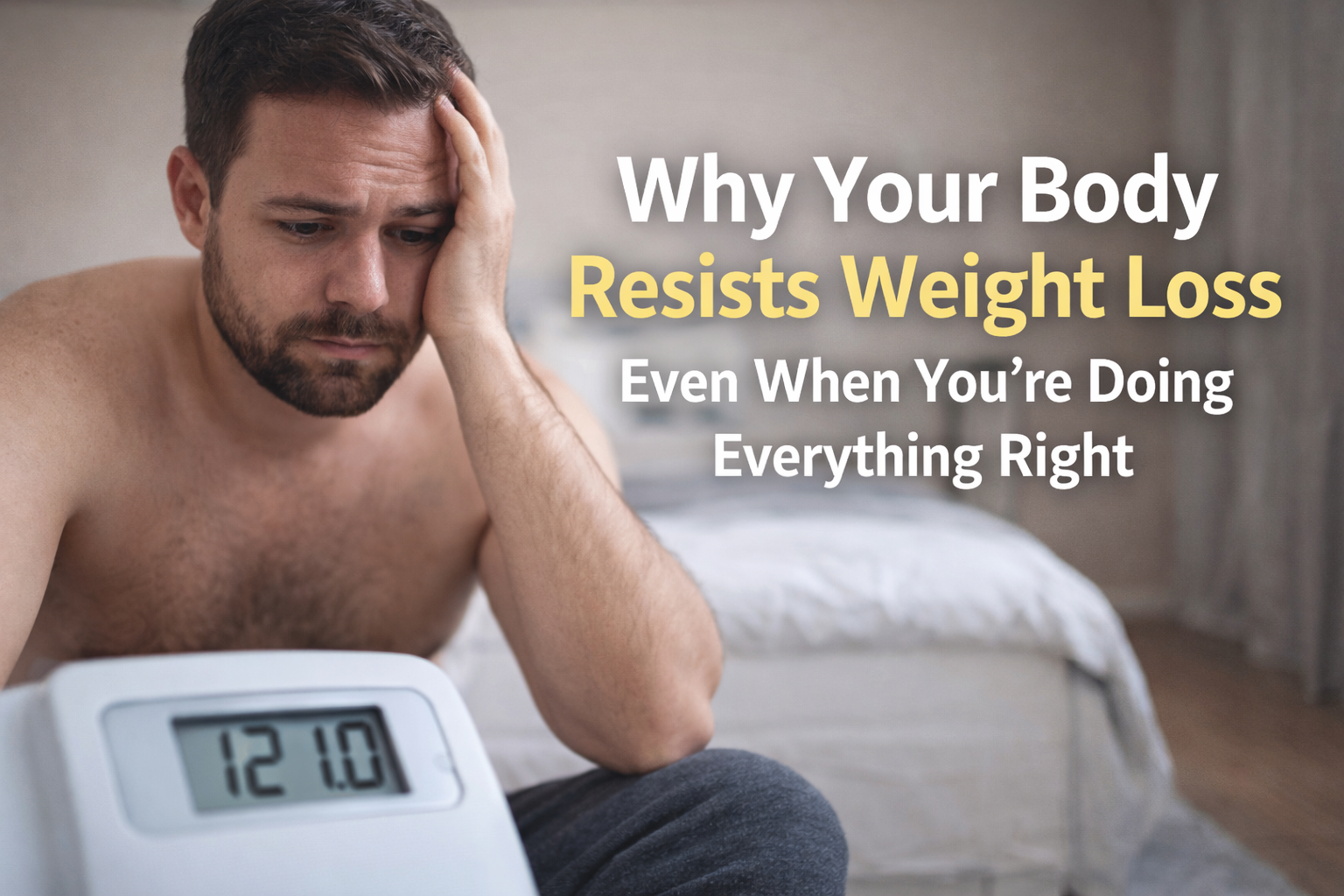
At one point, my weight was around 121 kg.
In the beginning, I was losing weight steadily.
Everything felt easy.
But after a few months, I hit a phase where:
Progress slowed down.
The scale barely moved.
Motivation started dropping.
Even though:
Diet was controlled.
Workouts were consistent.
Routine was stable.
Nothing changed.
That phase was more difficult than starting.
Because now I was putting in more effort, but seeing fewer results.
What helped me was understanding the situation.
Instead of forcing more, I stayed consistent and patient.
And slowly, progress started again.
Lower Weight Means Lower Energy Needs
This was something I understood later.
As your body weight reduces, your calorie need also reduces.
So the same diet that helped you lose weight earlier now only keeps your weight.
That creates confusion.
You feel like you’re doing everything right, but nothing is happening.
The truth is simple.
Your body has adjusted.
Stress Plays a Bigger Role Than You Think
During that phase, I made another mistake.
I started overthinking everything.
Checking my weight daily.
Getting frustrated easily.
Feeling stressed about progress.
And stress affects your body more than you think.
When stress increases:
Recovery becomes slower.
Energy levels drop.
Fat loss slows down.
Even if everything else is perfect, stress alone can affect results.
Why Progress Feels Slower Over Time
In the beginning, results come fast.
You lose water weight.
You feel lighter.
Everything feels exciting.
But later:
Changes become slower.
Results become less visible.
Progress feels boring.
This is completely normal.
Your body is now working on deeper changes.
During this time, I noticed:
My strength improved.
My energy improved.
My body felt better.
Even when the scale didn’t show it.
What Actually Helped Me
The solution was not doing more.
It was doing things better.
I stopped forcing results.
I focused on:
Staying consistent.
Reducing stress.
Making small adjustments.
Being patient.
That’s what helped me move ahead.
Resistance Does Not Mean Failure
This is something every beginner needs to understand.
When your body resists, it does not mean you are doing something wrong.
It usually means:
Your body is adapting.
Your system is improving.
Your progress is real.
Resistance is not the end.
It is part of the process.
What to Focus on Instead of the Scale
When I stopped focusing only on the scale, everything changed.
I started paying attention to:
Strength improvement.
Energy levels.
Daily routine.
Consistency.
These gave me a much better understanding of progress.
Because real progress is not always visible immediately.
Final Thoughts
If your body is resisting weight loss, it does not mean nothing is happening.
It means your body is adjusting.
From my experience, the biggest change happened when I stopped chasing fast results and started focusing on consistency.
Weight loss is not a race.
It is a long-term process.
Stay consistent. Stay patient.
Results will come.
⚠️ Disclaimer: This content is for informational purposes only and is not medical advice. Always consult a qualified professional before starting any fitness or diet program. Results vary.