
What Happens to Your Body After a Workout (Simple Explanation)
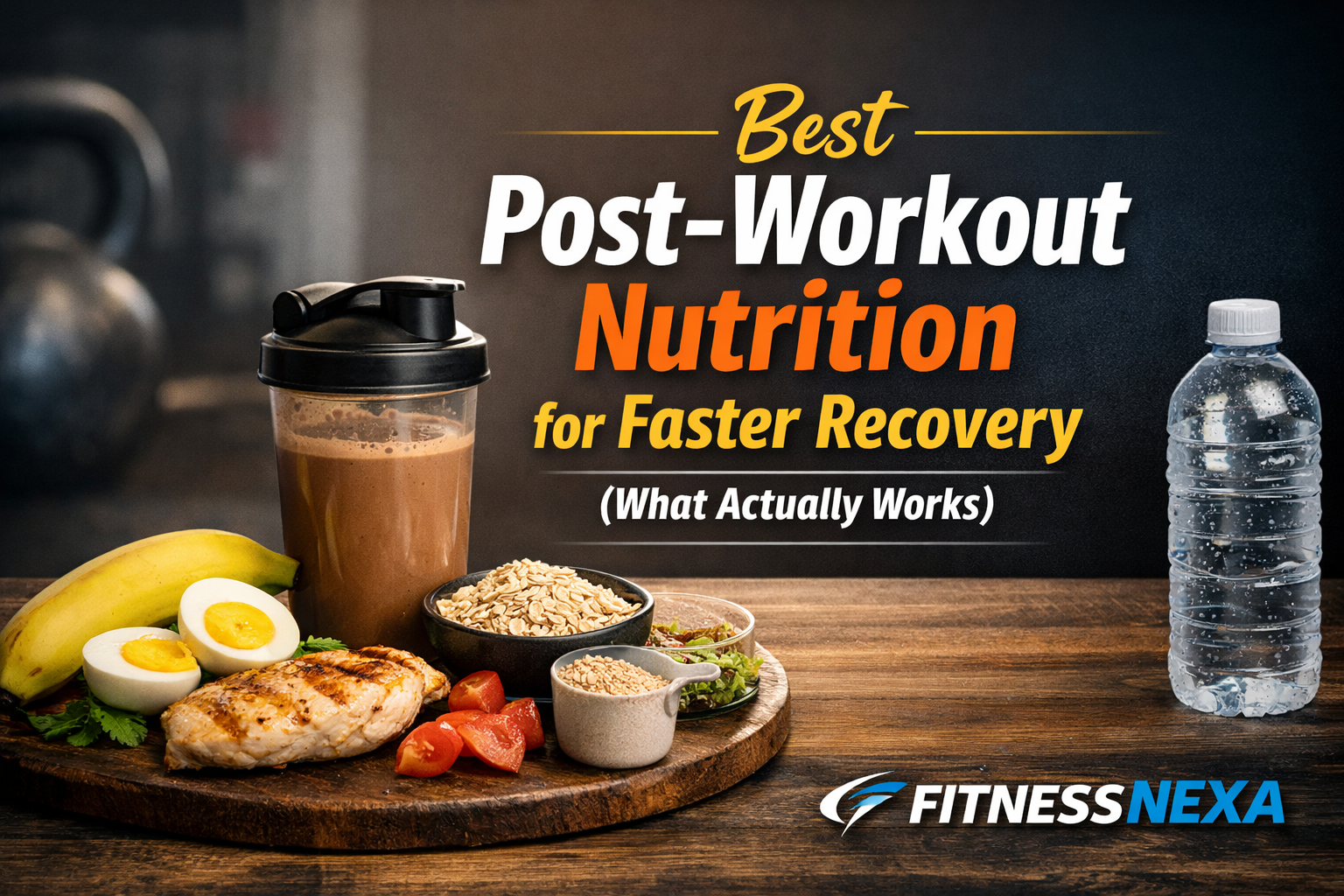
Best Post-Workout Nutrition for Faster Recovery (What Actually Works)
Introduction – Let’s Talk Honestly
When I first started working out, I believed one simple thing:
“If I train hard, results will come.”
So I focused completely on workouts.
✔ Intense training
✔ Sweating daily
✔ Trying different exercises
But I ignored one important part:
What I eat after the workout
And because of that, I started noticing problems.
• My body stayed sore for long
• My energy dropped quickly
• My progress became slow
At one point, I even thought:
“Maybe I am not training hard enough”
But the reality was different.
I was not recovering properly.
That’s when I started learning about post-workout nutrition.
And honestly, this changed everything.
If you are training but not seeing results…
There’s a high chance your recovery is the issue.
Let’s understand this in a simple, practical way.
Why Post-Workout Nutrition Matters (From My Experience)
Earlier, I used to think recovery just means resting.
But recovery actually starts with nutrition.
When you train:
• Your muscles break down
• Your energy stores reduce
• Your body goes into stress
This is normal.
But without proper nutrition:
❌ Recovery becomes slow
❌ Fatigue increases
❌ Progress stops
Once I fixed my post-workout meals, I noticed:
✔ Faster recovery
✔ Less soreness
✔ Better strength
What Happens Inside Your Body After a Workout
Let’s keep this simple.
After a workout, your body needs two main things:
1. Protein
To repair and rebuild muscles
2. Carbohydrates
To restore energy (glycogen)
If you ignore this:
Your body struggles to recover properly.
The “Post-Workout Window” – Reality Check
You have heard:
“Eat within 30 minutes or you lose gains”
From my experience — this is not completely true.
But this is what actually works:
✔ Eat within 1–2 hours after workout
✔ Don’t delay for too long
I personally saw better results when I stayed consistent with this.
Best Post-Workout Foods That Worked for Me
These are not theoretical.
These are foods I personally used and recommend.
1. Eggs (Full Protein Source)
One of the simplest and most effective foods.
✔ High-quality protein
✔ Supports muscle repair
✔ Easy to prepare
My experience: Quick recovery and better strength
2. Chicken Breast (Lean Protein)
A staple in my routine.
✔ High protein
✔ Low fat
✔ Helps in lean muscle growth
3. Dahi (Curd) – Underrated Recovery Food
I started using this regularly and noticed improvements.
✔ Good protein
✔ Improves digestion
✔ Helps nutrient absorption
4. Whey Protein (Convenient Choice)
Not mandatory — but helpful.
✔ Fast absorption
✔ Easy post-workout choice
✔ Useful when you’re busy
5. Banana (Quick Energy)
Simple but effective.
✔ Restores energy
✔ Prevents cramps
✔ Easy to consume
6. Oats (Balanced Carbs)
Great for sustained recovery.
✔ Slow-digesting carbs
✔ Keeps energy stable
✔ Supports fat loss
7. Sweet Potato (Clean Carb Source)
A great option to refined carbs.
✔ Rich in nutrients
✔ Supports recovery
✔ Helps reduce fatigue
8. Paneer (Slow-Digesting Protein)
Very useful, especially in evening workouts.
✔ Slow protein release
✔ Supports overnight recovery
✔ Keeps you full
9. Nuts & Seeds (Healthy Support)
Small addition — big advantage.
✔ Healthy fats
✔ Supports hormones
✔ Improves recovery
10. Water & Electrolytes (Most Ignored)
This is where most people go wrong.
✔ Prevents fatigue
✔ Improves performance
✔ Supports recovery
Simple Understanding
Instead of complicating:
✔ Protein + carbs = recovery
❌ Skipping meals = slow progress
What I Personally Followed (Simple Meals)
You don’t need complex plans.
Here’s what worked for me:
• Eggs + oats
• Whey protein + banana
• Chicken + rice + vegetables
• Paneer + sweet potato
• Dahi + nuts
Common Mistakes I Made (Avoid These)
This part is very important.
Because I made these mistakes myself.
❌ Skipping post-workout meals
❌ Eating junk after workout
❌ Relying only on supplements
❌ Ignoring hydration
Simple Fix
✔ Eat simple whole foods
✔ Stay consistent
✔ Focus on basics
Myth vs Reality (Very Important)
Myth:
You must eat within 30 minutes
Reality:
Consistency matters more than timing
Myth:
Only supplements build muscle
Reality:
Whole food is the foundation
FAQs
1. How much protein do I need post-workout?
Around 20–40 grams is enough for most people.
2. Is whey protein necessary?
No — but it is convenient.
3. Can I skip carbs?
Not recommended — they help recovery.
4. Is post-workout nutrition important for fat loss?
Yes — it helps keep muscle and improve results.
Final Thoughts
From my experience, most people focus too much on workouts.
But ignore recovery.
That’s the biggest mistake.
Earlier, I trained hard but saw slow results.
Now I understand:
Recovery is where real progress happens
You don’t need:
❌ Complicated diets
❌ Expensive supplements
You just need:
✔ Proper nutrition
✔ Consistency
✔ Basic understanding
Remember this:
Train hard
Recover smart
Stay consistent
Author Bio
I’m a fitness enthusiast who has learned everything through real-life experience, mistakes, and consistency. I focus on practical, sustainable fitness approaches that actually work in real life.
⚠️ Disclaimer: This content is for informational purposes only and is not medical advice. Always consult a qualified professional before starting any fitness or diet program. Results vary.